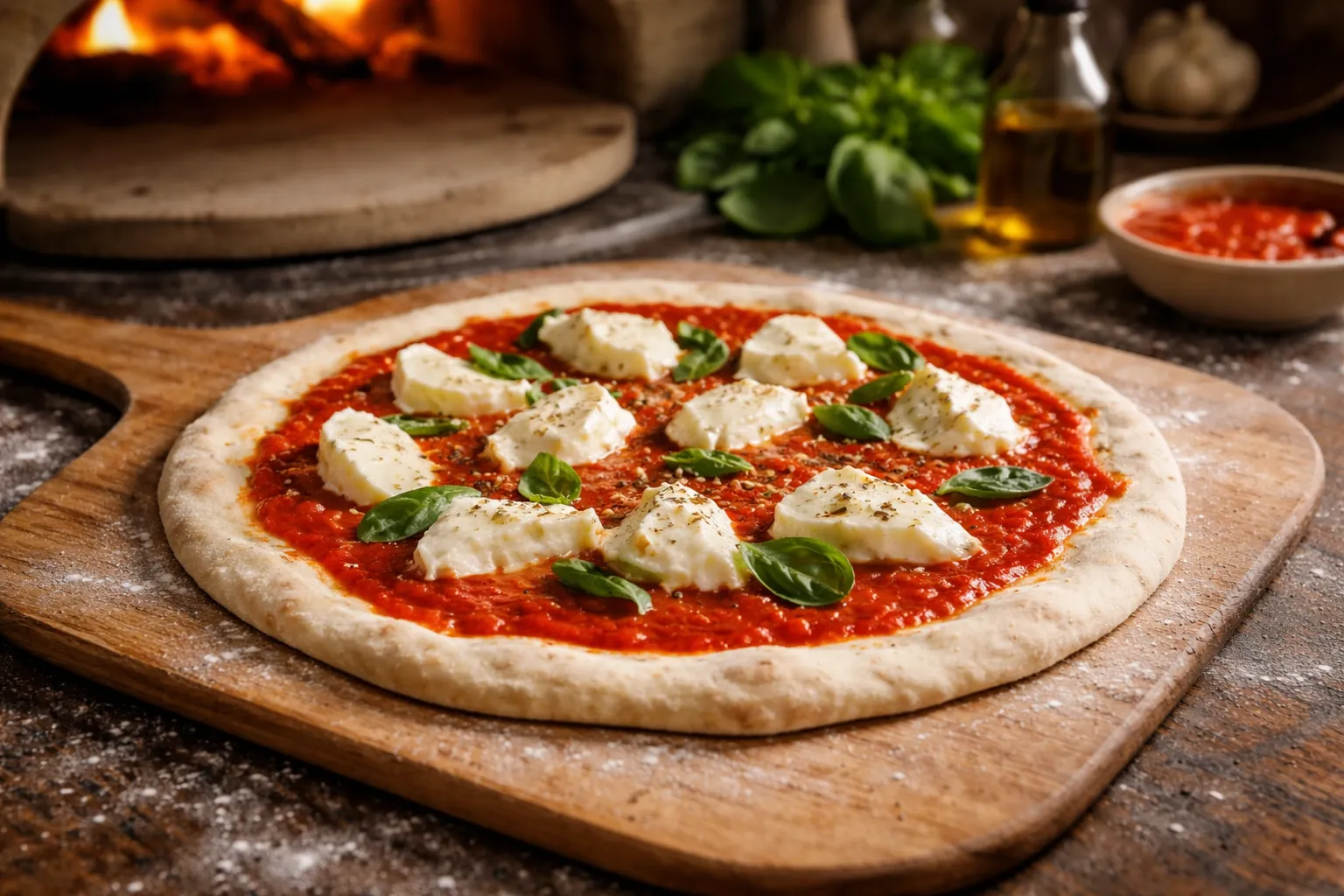
It was a Friday night, I had a jar of sourdough discard that was approximately the age of a small toddler, a husband giving me the “should we just call Domino’s?” look, and flour on my face that I absolutely did not put there intentionally. That is the moment sourdough discard pizza dough entered my life and genuinely changed my Friday evenings forever.
I had been baking sourdough for almost two years at that point, and like every dedicated discard hoarder, I had a collection of sad little jars in my fridge just waiting for purpose. I’d made crackers, pancakes, muffins. But pizza? I was convinced it would take days, a preferment, a spreadsheet, and possibly a minor in food science. I was so wrong, and the story of how I found that out is equal parts embarrassing and delightful.
The Embarrassing Friday That Started It All
Here is the scene: I had confidently told my husband we were making homemade pizza that night. I had watched exactly one YouTube video, felt extremely qualified, and mixed together what I believed was a beautiful dough. What I had actually made was a paste. A very sticky, very sad, will-not-hold-any-shape paste. I tried to stretch it. It tore. I tried to roll it. It laughed at me. I attempted to transfer it to a pan and it folded in on itself like it was embarrassed to be there.
We ordered Domino’s. I cried a little. Not my finest hour.
But here is the twist: while eating my consolation pizza I started actually reading about hydration ratios, the role of discard versus active starter, and why resting your dough is not optional but is in fact a non-negotiable act of respect. I grabbed a pen, took notes on the back of the pizza box (very on brand), and decided next Friday would be different. Reader, it absolutely was.
Why Sourdough Discard Pizza Dough Works So Well as a Same-Day Dough
The beauty of using discard here is that you are not asking it to leaven anything. You are using it purely for flavor, a little acidity, and that gorgeous complexity that makes people ask what your secret ingredient is. The actual rise comes from commercial yeast, which means this dough can go from bowl to oven in about two to three hours. No overnight wait. No planning your weekend around your starter’s schedule. Just pizza on a Friday like a reasonable adult.
The discard also adds extensibility to the dough. This is the technical way of saying it stretches really well without snapping back at you, which was entirely the problem I had that first humbling Friday. The acids in discard relax the gluten strands over time, so even with a shorter rest, you get a dough that cooperates. It wants to be pizza. Let it be pizza.
One important note: use discard that has been refrigerated and is no more than about a week old. Very old, very sour discard will make your dough taste almost vinegary, and while some people are into that, it tends to overwhelm the toppings. A mildly tangy discard gives you that signature sourdough flavor without going overboard.
The Recipe: Same-Day Sourdough Discard Pizza Dough
Ingredients (makes two 12-inch pizzas)
- 300g bread flour (or all-purpose in a pinch, but bread flour gives better chew)
- 100g sourdough discard, unfed and straight from the fridge
- 150g warm water (around 90 to 95 degrees Fahrenheit)
- 5g instant yeast (about 1 and a half teaspoons)
- 8g fine sea salt
- 15g olive oil, plus more for the bowl
Instructions
Combine your warm water, yeast, and discard in a large bowl and stir until roughly combined. It will look a little lumpy and uneven and that is completely fine. Add the flour, salt, and olive oil and mix until a shaggy dough forms. Turn it out onto a lightly floured surface and knead for about eight minutes until the dough is smooth, slightly tacky but not sticky, and springs back slowly when you poke it. If it is still tearing or feels stiff, give it another two minutes. Your dough is telling you what it needs.
Shape the dough into a ball, place it in a lightly oiled bowl, cover it with a damp towel or plastic wrap, and let it rest at room temperature for 90 minutes to two hours. It should nearly double. Then divide it into two equal pieces, shape each into a tight ball, cover again, and let them rest another 20 minutes before stretching. That final rest is the step I skipped on Failure Friday, and it makes all the difference. The gluten needs a moment to relax before you ask it to become a pizza shape.
Preheat your oven as high as it will go, ideally 500 to 550 degrees Fahrenheit, with your pizza stone inside for at least 45 minutes. A properly preheated stone is what gets you that crispy, slightly charred bottom that makes homemade pizza taste like it came from a wood-fired oven.
Tips for Stretching Without Tears
- Use your knuckles, not a rolling pin. A rolling pin presses out the air bubbles you worked hard to create.
- Work from the center outward, rotating as you go.
- If it keeps snapping back, cover it and walk away for five minutes. Come back and it will cooperate.
- A slightly thicker edge naturally gives you that beautiful puffy crust.
- Build your pizza on parchment or directly on a well-floured peel, not on the counter, to make transfer easier.
The Pizza Stone That Finally Stops My Discard Dough From Sticking
Same-day discard pizza dough is wet, sticky, and unforgiving—it’ll slide off a cold baking sheet faster than you can say “Domino’s.” A properly heated pizza stone gives you the thermal mass to actually brown the bottom while keeping the dough where it belongs.
What works
- The rectangular shape fits standard oven racks without awkward tilting, and it’s just wide enough that my 10-inch pizzas don’t feel like they’re about to slide off the edge.
- Heat retention is genuinely impressive—I preheat it for 30 minutes at 475°F and it bounces back almost instantly after the cold dough hits it, which means a properly crisped bottom even on a quick bake.
- The thickness is substantial enough that it doesn’t crack under temperature swings, and after three years of weekly Friday pizza nights, it’s still in one piece.
What doesn’t
- It’s heavy enough that sliding it in and out of a lower oven rack requires both hands and minor commitment—no one-handed pizza moves here.
- You absolutely cannot shock it with water or put it in a cold sink after use; it needs to cool gradually or it will absolutely betray you with a crack.
I once forgot to preheat it one Friday (the Domino’s threat was real) and nearly gave up on the whole thing—but now I set a phone reminder like a sane person. Unicook Pizza Stone, 15 x 12 Inch Rectangular
This post contains affiliate links. As an Amazon Associate, I earn from qualifying purchases at no extra cost to you.