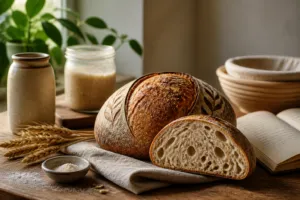
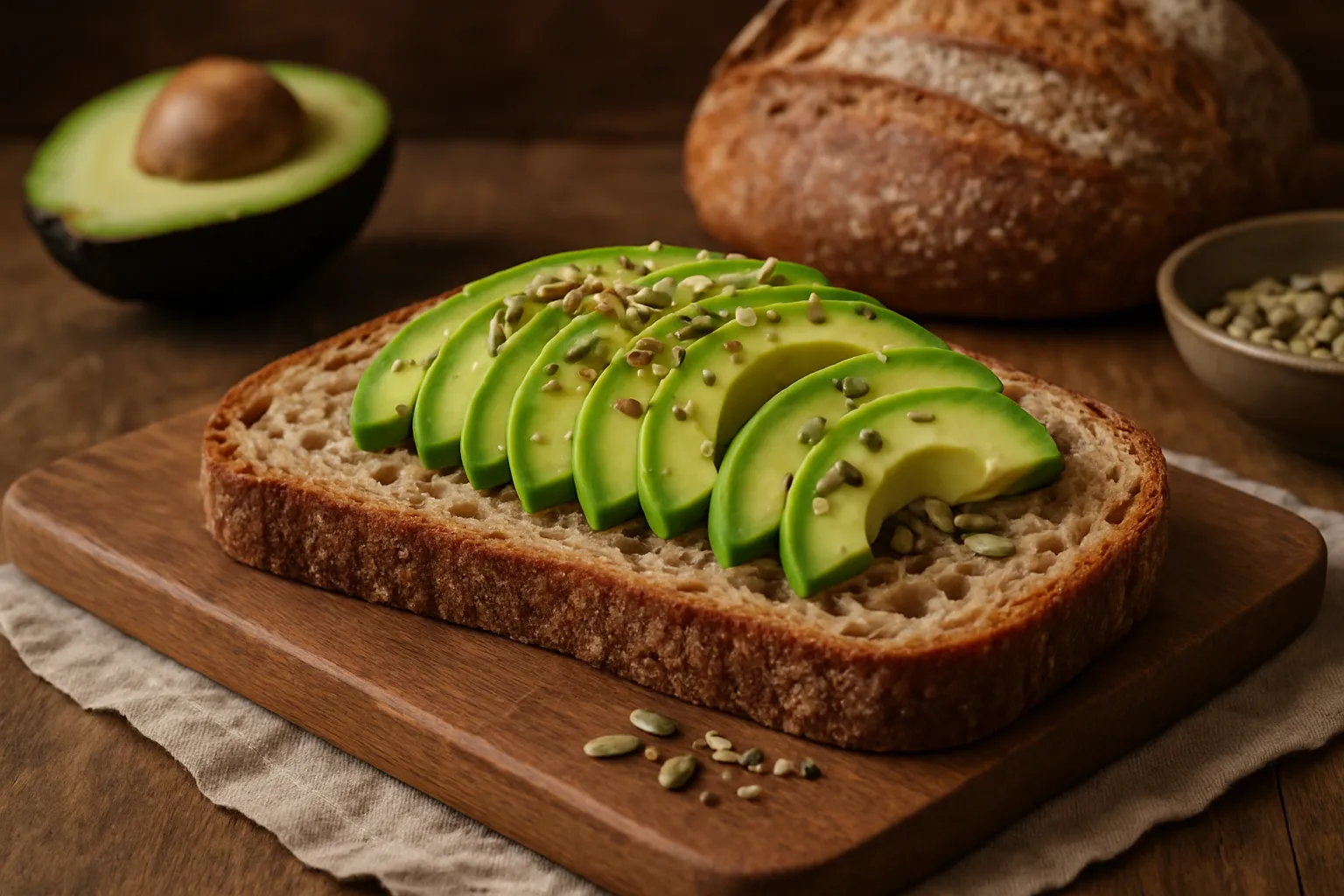
A few years ago, my mother-in-law mentioned she had been avoiding bread because of her blood sugar levels. I handed her a thick slice of my long-fermented whole wheat sourdough and told her to just try it. She was skeptical — bread is bread, right? But after doing a little digging into the research, I realized there was a genuinely fascinating story hiding inside every loaf I’d been baking. It turns out the relationship between sourdough bread glycemic index blood sugar response is something every baker and bread lover deserves to understand. What fermentation does to a simple mixture of flour and water goes far beyond flavor — it fundamentally changes how your body processes every single bite.
Why Sourdough Bread Has a Lower Glycemic Index Than Regular Bread
Let’s start with the basics. The glycemic index, or GI, is a measure of how quickly a food raises your blood glucose levels after eating. White sandwich bread typically scores around 70–75 on the GI scale — that’s considered high. Traditional sourdough, especially when made with whole grain flours and given a long, slow fermentation, often scores in the low-to-mid 50s. That’s a meaningful difference, and it comes down to the remarkable chemistry happening during fermentation.
When your sourdough starter goes to work, the wild yeast and lactic acid bacteria are doing much more than producing bubbles and tang. They’re breaking down phytic acid, which is an antinutrient found in grains that normally blocks the absorption of minerals like iron, zinc, and magnesium. At the same time, those beneficial bacteria are producing organic acids — primarily lactic and acetic acid — that lower the pH of the dough. This acidic environment actually slows the rate at which enzymes in your digestive system break down starches into glucose. Slower starch digestion equals a gentler, more gradual rise in blood sugar. That’s the magic.
There’s also something called resistant starch to consider. Long fermentation and even the process of cooling a baked loaf before eating it increases the amount of resistant starch in bread. Resistant starch acts more like fiber in your body — it bypasses digestion in the small intestine and feeds beneficial gut bacteria instead. Your blood sugar barely notices it.
How to Maximize the Blood Sugar Benefits When You Bake
Here’s where the practical, hands-on stuff comes in — because not all sourdough is created equal. A fast, commercially yeasted bread labeled “sourdough” at the grocery store doesn’t deliver the same benefits. You need real, active fermentation, and you need time. Here’s what I’ve learned from years of baking and reading everything I can get my hands on.
Use Whole Grain Flours
Whole wheat, spelt, rye, and einkorn all contain more fiber, more bran, and more of the nutrients that slow digestion. The bran physically slows the rate at which digestive enzymes access the starch inside each grain particle. I started experimenting with whole grain blends a couple of years ago and never looked back. If you’re new to whole grain sourdough baking, I can’t recommend Whole Grain Sourdough at Home by Kirsten Shockey enough. It’s the book that taught me how to work with ancient grains like einkorn and spelt without ending up with a dense brick — and the nutritional payoff is absolutely worth the learning curve.
Ferment Low and Slow
A bulk fermentation of 4–6 hours at room temperature followed by an overnight cold retard in the refrigerator is my gold standard. The longer that dough ferments, the more the bacteria have time to produce those organic acids that slow starch digestion. Don’t rush it. I know it’s tempting to speed things up on a busy weeknight, but your blood sugar — and your flavor — will thank you for the patience.
Let the Loaf Cool Completely
I used to slice into loaves the moment they came out of the oven. The steam, the smell — it was irresistible. But cutting into a hot loaf not only gums up the crumb, it also means you’re eating starch that hasn’t had a chance to retrograde into those beneficial resistant starches I mentioned earlier. Give your loaf at least two hours to cool on a wire rack. Overnight is even better.
Testing Your Loaf’s Real Impact: Why I Started Measuring Blood Sugar Myself
It’s one thing to read studies about fermentation lowering glycemic response—it’s another to actually see how your own sourdough affects your blood sugar. I got tired of making claims I couldn’t back up with real data from my own kitchen, so I started doing informal glucose tests on myself and a few willing friends.
What works
- Results are fast and consistent enough to compare the same loaf across different fermentation times—I could actually see the difference between a 12-hour and 48-hour bulk.
- The test strips and lancets are affordable enough that you’re not sweating the cost of running multiple experiments (I probably burned through 30 strips testing different hydration levels and flours).
- No coding required means you’re not fussing with calibration strips when you just want to grab a reading after breakfast.
What doesn’t
- You still have to prick your finger every time, which gets old fast when you’re trying to test multiple variables across a week of baking.
- Individual glucose response varies wildly—what lowered my spike by 15% barely moved my husband’s numbers, so don’t expect one loaf to be a universal solution.
I almost gave up after my first batch of readings looked completely random, wondering if I was testing wrong or if fermentation actually mattered at all. But once I started controlling for timing and portion size, the pattern became real—and suddenly my obsession with long fermentation had scientific weight behind it. G-425-1 Blood Glucose Monitor Kit
This post contains affiliate links. As an Amazon Associate, I earn from qualifying purchases at no extra cost to you.