I’ll never forget the first time I tried to fold a handful of everything bagel seasoning into my sourdough dough during bulk fermentation. I was so excited about the idea — and so completely unprepared for the chaos that followed. Seeds everywhere, dough tearing, and a loaf that came out looking like it had survived a small explosion. But here’s the thing: it tasted incredible. That one messy, humbling experience opened my eyes to just how transformative sourdough add-ins seeds nuts herbs and other mix-ins can be. Once you understand the how and the when, you unlock a whole new world of baking creativity.
Why Add-Ins Make Sourdough Even Better
Plain sourdough is already a thing of beauty — that tang, that crust, that open crumb. But add-ins let you push the loaf in any direction you want. Nutty and hearty? Load up on seeds. Savory and aromatic? Fresh rosemary and roasted garlic. Something a little unexpected and special? Toasted walnuts and dried cranberries. The possibilities are genuinely endless, and the good news is that most add-ins are forgiving once you know a few basic rules.
The biggest lesson I’ve learned over years of baking is that timing and hydration management are everything when it comes to mix-ins. Add the wrong thing at the wrong moment, and you’ll fight your dough all the way to the oven. Get it right, and the dough practically welcomes each new ingredient.
Sourdough Add-Ins: Seeds, Nuts, Herbs, and How to Use Them Right
Seeds: The Workhorses of Mix-Ins
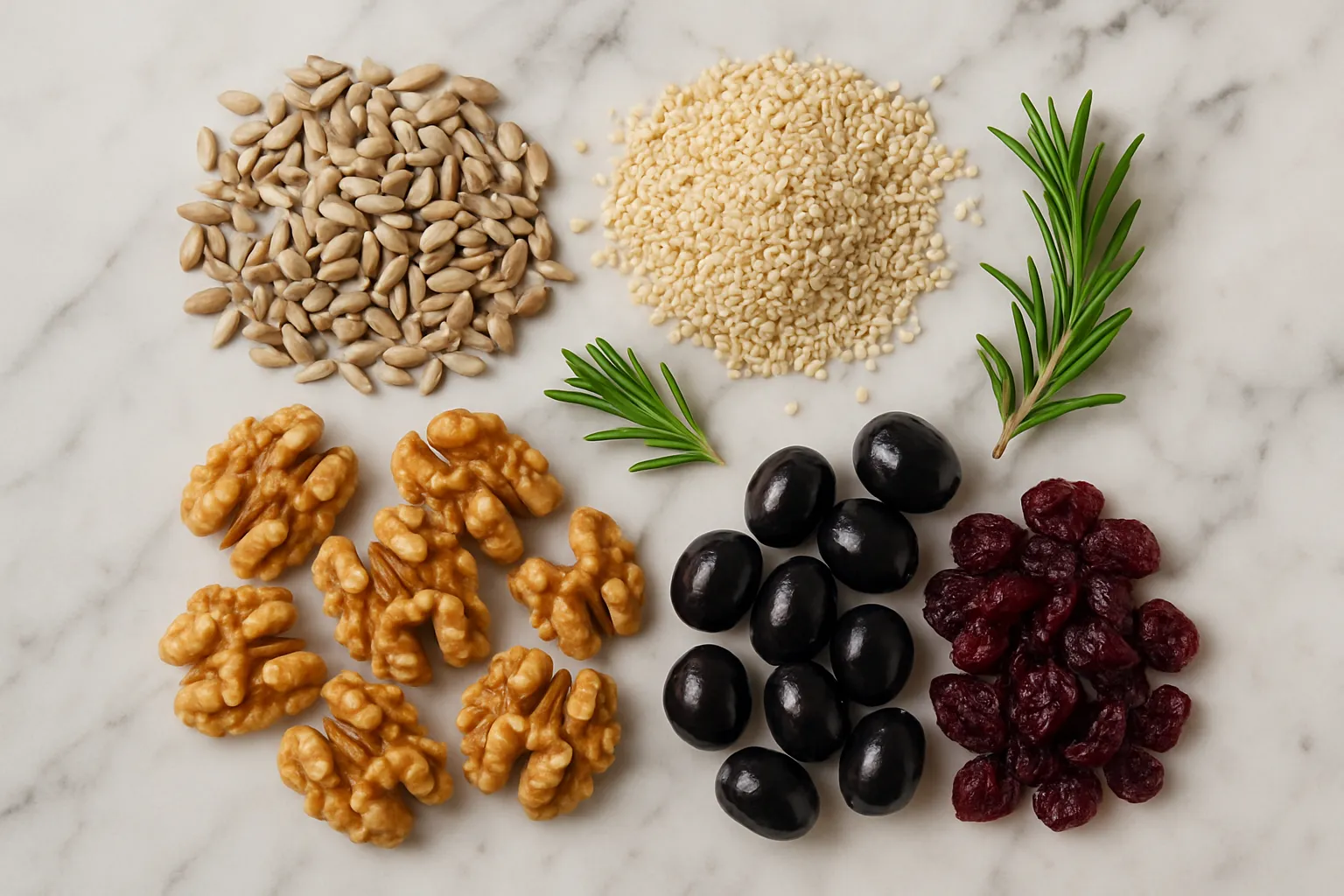
Seeds are my absolute favorite add-ins, and for good reason. They bring texture, nutrition, and a toasty depth of flavor that plays beautifully against the tang of a well-fermented sourdough. Sunflower seeds are my go-to for everyday baking — they’re mild enough to please everyone, and they toast up beautifully during the bake.
One important thing to know: some seeds, especially chia and flax, absorb a significant amount of water. If you’re tossing them in dry, they’ll suck moisture right out of your dough and tighten the crumb. My trick is to soak absorbent seeds in a small amount of water for 20–30 minutes before adding them. It keeps your hydration balanced and actually makes the seeds easier to incorporate.
For sesame seeds, I prefer toasted varieties — they bring a nutty, almost buttery warmth that raw sesame just can’t match. I love pressing them onto the outside of the shaped loaf before the final proof, too. They create the most beautiful, crackling crust.
My current seed rotation includes sunflower, sesame, pumpkin, and a blend of flax, chia, and hemp. I typically add seeds during the first stretch-and-fold, about 30 minutes into bulk fermentation, once the gluten has started to develop. This gives the dough structure before you stress it with inclusions.
Nuts: Bold, Buttery, and Worth Every Bite
Walnuts, pecans, hazelnuts, and almonds all work wonderfully in sourdough. I always toast my nuts before adding them — a dry skillet over medium heat for five minutes makes a huge difference in flavor. Raw nuts can taste a little flat and sometimes release oils that interfere with gluten development.
For distribution, I find that chopping nuts into rough, irregular pieces rather than fine crumbles gives the best result. You get those satisfying pockets of crunch throughout the crumb rather than a gummy, oily texture. Add nuts the same way you’d add seeds: during an early stretch-and-fold, folding them in gently so you don’t deflate the dough.
One of my favorite combinations is walnut and rosemary — it’s rustic, fragrant, and absolutely stunning alongside a good cheese board. Don’t be shy with the walnuts; I use about 100–120 grams per 900-gram loaf.
Herbs: Fresh vs. Dried and When to Use Each
Herbs transform a simple loaf into something that smells like a bakery in Provence. Fresh herbs are wonderful but carry moisture, so I add them sparingly — usually during the lamination step or an early fold. Rosemary, thyme, and chives are my top three. Dried herbs are more concentrated in flavor and much easier to manage in wet dough. I typically use about half the quantity of dried versus fresh.
Garlic and herbs deserve a special mention. Roasted garlic folded into a rosemary loaf is one of the most crowd-pleasing things you can bake. Just make sure the garlic is fully roasted and cooled — raw garlic can actually inhibit fermentation because of its antimicrobial properties. I learned that one the hard way after a mysteriously flat loaf.
Sunflower Seeds That Don’t Split Your Dough During Fold-In
After that everything bagel disaster, I realized the problem wasn’t the add-ins themselves — it was using seeds that were too small and sharp, tearing the gluten network right when I needed it most. Larger, sturdier sunflower seeds fold in cleanly without punching holes through your dough during bulk fermentation.
What works
- They’re substantial enough to fold in gently without the dough tearing — I noticed way less structural damage compared to tiny seeds that create weak points.
- They stay evenly distributed through the crumb instead of sinking to the bottom or clumping in pockets, which means every slice has that nutty flavor.
- Organic certification means no mystery coatings or treatments that might affect fermentation timing — my bulk times stayed predictable even with a full handful mixed in.
What doesn’t
- They’re pricier per ounce than buying seeds in bulk at the grocery store, which adds up if you’re baking four loaves a week.
- The bag can sit in your pantry for months before you use it all, and even sealed, they’ll eventually go slightly rancid if you’re not rotating stock regularly.
I doubted whether paying this much for seeds was worth it until I pulled apart a loaf and saw perfect distribution and zero dough damage — that was the moment it clicked. Grab the NOW Foods Certified Organic Sunflower Seeds and fold confidently.
This post contains affiliate links. As an Amazon Associate, I earn from qualifying purchases at no extra cost to you.