I still remember the afternoon I pulled what I thought would be my best loaf ever out of the oven — only to find a dense, gummy crumb that stuck to the knife like wet clay. I had followed the recipe perfectly, or so I thought. Turns out, I had bumped up the water without understanding what I was actually doing to my dough. That disaster sent me deep into researching this sourdough hydration levels guide, and honestly? It changed everything about how I bake. If you’ve ever wondered why your dough behaves so differently from batch to batch, hydration is almost certainly a big part of the answer.
What Does Hydration Actually Mean in Sourdough?
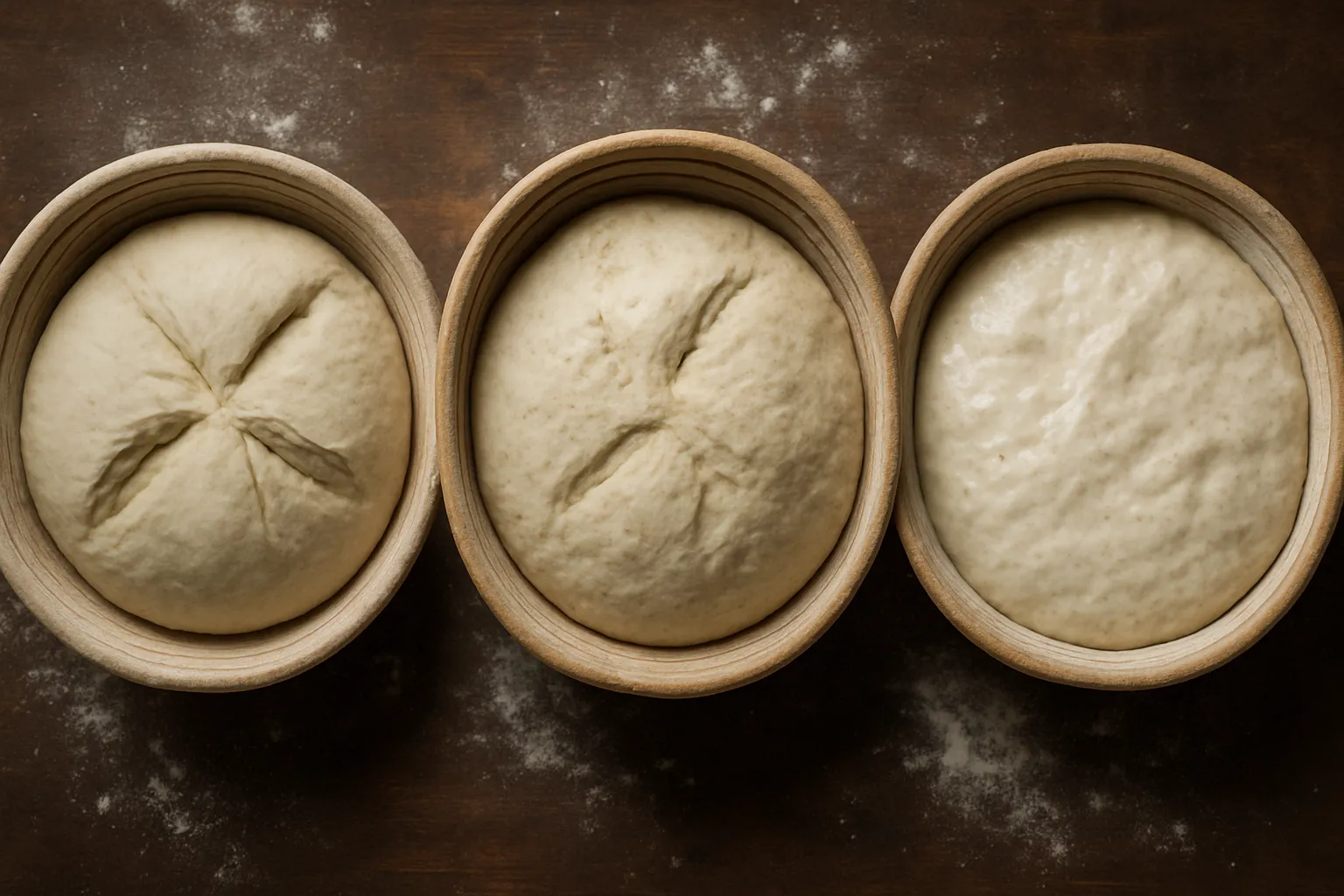
Hydration, in baking terms, is simply the ratio of water to flour in your dough, expressed as a percentage. If you use 500 grams of flour and 375 grams of water, you’re working with 75% hydration. That’s it. Simple math, but the downstream effects on your dough’s texture, handling, fermentation, and final crumb are anything but simple. Higher hydration doughs tend to produce more open, airy crumbs with that gorgeous lacework you see on Instagram. Lower hydration doughs are easier to shape, more forgiving, and often better for beginners. Neither is inherently better — they’re just different tools for different goals.
It’s also worth noting that hydration interacts with your flour type. A bread flour with high protein content can absorb significantly more water than an all-purpose flour, and whole wheat flour is thirstier still. So when you read a recipe calling for 80% hydration, always consider what flour is being used before you assume your dough should behave the same way.
Breaking Down 65%, 75%, and 80% Hydration — What to Expect
65% Hydration: Your New Best Friend as a Beginner
A 65% hydration dough is stiffer, more cohesive, and dramatically easier to handle than its wetter counterparts. When you mix it, it comes together quickly and doesn’t stick aggressively to your hands or your work surface. Shaping is a genuinely pleasant experience — the dough holds tension beautifully and cooperates when you’re trying to build that tight outer skin. The resulting loaf typically has a tighter, more uniform crumb, which is actually ideal for sandwich bread or toast. Don’t let anyone tell you a tight crumb is a failure. A perfectly baked 65% loaf with a crackly crust and tender interior is deeply satisfying.
If you’re new to sourdough or you’ve been struggling with sticky, unmanageable dough, I genuinely encourage you to start here. Get your timing and fermentation dialed in first. The hydration can always come later.
75% Hydration: The Sweet Spot for Most Home Bakers
This is where I spend most of my time, and I’d wager it’s the range where the majority of home bakers find their groove. At 75%, the dough is noticeably softer and a bit tacky, but still manageable with good technique. You’ll want to use stretch-and-fold sets during bulk fermentation rather than traditional kneading — this builds gluten strength without the sticky mess. The crumb opens up beautifully at this hydration, giving you that satisfying mix of irregular holes and chewy structure. It’s also forgiving enough that small timing variations won’t completely derail your bake.
Shaping at 75% takes a bit more confidence than at 65%, but a light dusting of flour on your bench and quick, decisive movements will get you there. This is the hydration level I recommend to bakers who’ve gotten a few loaves under their belt and are ready to push toward a more artisan-style open crumb.
80% Hydration: Beautiful Chaos Worth Mastering
Let me be honest with you: 80% hydration dough will humble you the first several times you work with it. It’s wet, it spreads, and it seems to have a personal vendetta against clean countertops. But when you get it right — when the fermentation is spot on, the gluten is strong, and your shaping technique has developed enough confidence — the results are breathtaking. Wide-open crumb, a deeply caramelized crust, and a chew that makes you close your eyes on the first bite. This is the territory of serious sourdough obsessives, and I mean that as the highest compliment.
Working with 80% dough successfully requires well-developed gluten through multiple stretch-and-fold or coil fold sessions, a flour that can handle the hydration, and ideally a cold retard in the fridge overnight to firm the dough enough for scoring. Don’t skip the bench scraper at this hydration — it becomes your most essential tool.
The Bowl That Let Me Actually Feel My High-Hydration Dough
When you’re working with 75% or 80% hydration dough, you need a bowl big enough that your dough doesn’t feel cramped during bulk fermentation — and one that lets you see exactly what’s happening without constantly dumping it onto the counter. A proper 8-quart mixing bowl changed how I could actually observe gluten development and judge when my dough was ready to shape.
What works
- The 8-quart capacity gives high-hydration dough room to expand without the edges creeping up the sides, so you can do proper stretch-and-folds without the dough feeling boxed in.
- The two-tone stainless steel lets you actually see your dough development clearly — I can watch the gluten network transform from shaggy to smooth without having to turn on extra lights or tilt the bowl.
- The weight and stability mean the bowl doesn’t slide around on the counter during vigorous mixing or folding, which matters when you’re handling sticky, wet dough that demands confident technique.
What doesn’t
- It’s heavy when full of wet dough — dumping it for a pre-shape stretch requires actual arm strength, which I learned the hard way after a 4-hour bulk fermentation.
- The rim can catch dough scraps during folding if you’re not careful, which means you have to wipe it down mid-fermentation or risk dried bits contaminating your next stretch.
I almost abandoned it after one bulk fermentation where I misjudged how much dough had actually risen and the mass nearly spilled over the rim — but once I adjusted my portion sizes, this became the one tool I genuinely reach for every bake. Oggi 8-Quart Two-Tone Stainless Steel Mixing Bowl
This post contains affiliate links. As an Amazon Associate, I earn from qualifying purchases at no extra cost to you.