
This post contains affiliate links. As an Amazon Associate, I earn from qualifying purchases at no extra cost to you.
I had killed three sourdough starters in two months. Three. Each time, I followed guides, watched videos, and still ended up with a sad, flat jar of flour and water that smelled more like nail polish remover than bread. So when I stumbled across this Breadtopia sourdough starter culture review discussion in a home baking forum, I paid close attention. People were raving about skipping the seven-to-fourteen day activation grind entirely. That sounded almost too good to be true — but I was desperate enough to try.
My problem was simple but frustrating. I wanted to bake real sourdough bread at home. However, every time I tried building a starter from scratch, something went wrong. Either I over-fed it, under-fed it, or just couldn’t tell whether the bubbles I saw meant success or impending failure. I needed a shortcut — not a cheat, but a reliable foundation to build from. A living, already-active culture seemed like exactly that.
After a lot of research, I ordered the Breadtopia Live Sourdough Starter | Organic Non-GMO Ingredients | Active & Ready to Go | It’s Alive – Must be Fed Immediately on Delivery. Here’s exactly what happened over the next five days — the good, the stressful, and the surprisingly delicious.
Why I Chose the Breadtopia Live Sourdough Starter
Before buying, I spent about a week comparing options. Several popular starter kits came up repeatedly, but many were dehydrated or freeze-dried cultures. Those work, but they still require a week or more of reactivation. What I wanted was something genuinely alive and already bubbling when it arrived.
Breadtopia kept coming up in conversations for good reasons. The company has been around since 2006 and has a strong reputation among serious home bakers. Their live starter is made with organic, non-GMO ingredients, which mattered to me since I try to be intentional about what goes into my food. Additionally, the product listing was unusually transparent — it literally says “It’s Alive – Must be Fed Immediately on Delivery,” which told me they understood the product and weren’t just shipping something shelf-stable with a misleading label.
The reviews also felt credible. Many reviewers mentioned specific timelines, feeding ratios, and actual baking results — not just vague five-star enthusiasm. That level of detail made me trust the feedback more. Finally, the price point was reasonable for what you’re getting: a living culture with established microbial activity, not just flour in a bag.
First Impressions: Unboxing a Living Thing
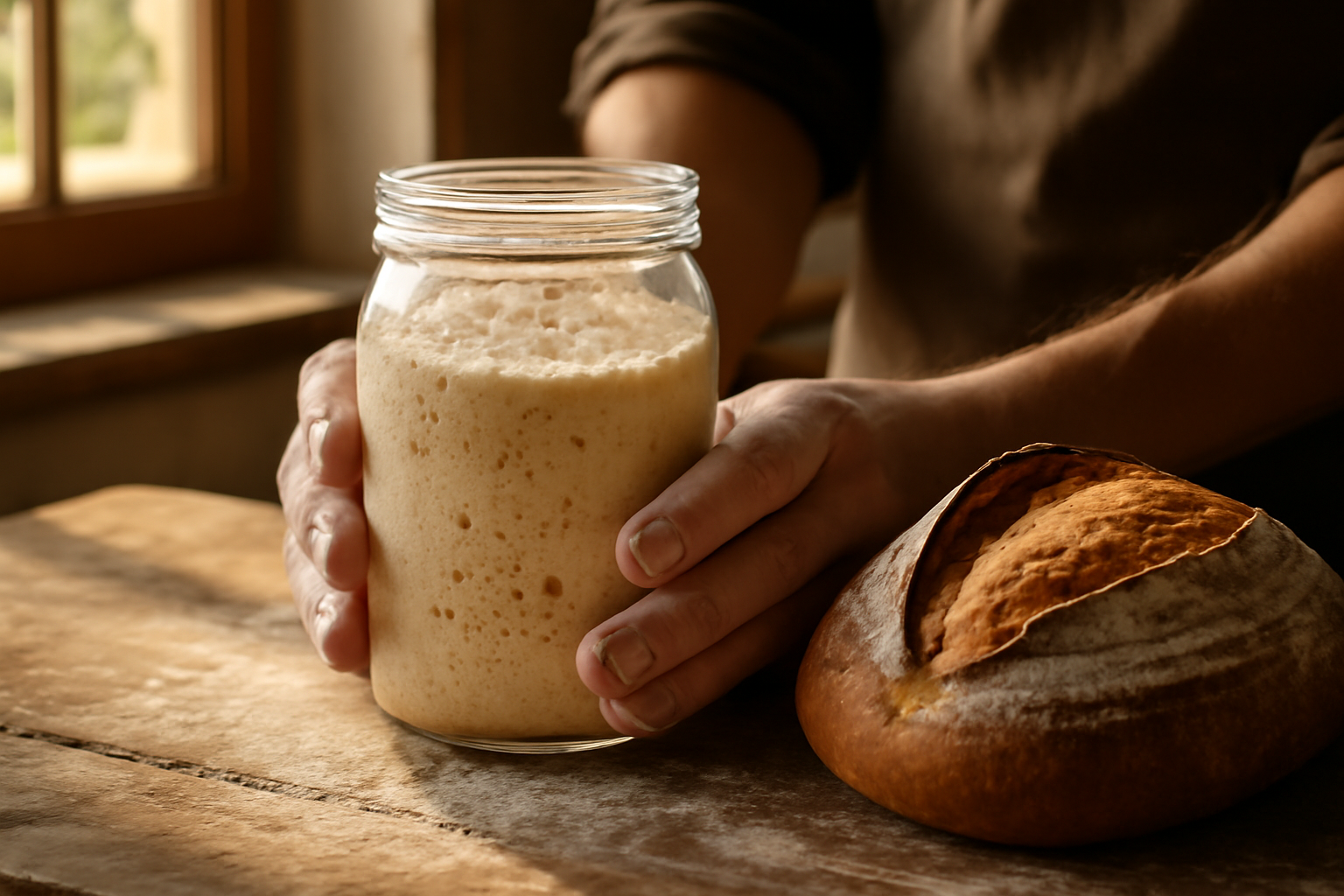
The package arrived in a small padded mailer. Inside was a sealed plastic bag containing the starter — a pale, somewhat liquidy mixture that smelled distinctly sour and yeasty. Honestly, my first thought was: this smells like bread is already happening. That was encouraging.
The instructions included were clear and straightforward. Breadtopia tells you upfront to feed the starter immediately upon arrival. They explain that the culture gets stressed during shipping and needs food right away. That transparency was reassuring — they’re not pretending the shipping process is seamless. They’re giving you a heads-up and a plan.
I transferred the starter into a clean glass jar, fed it with a 1:1:1 ratio of starter, water, and flour as directed, and set it on my counter. The mixture looked thin at first. There wasn’t much visible activity right away, which gave me a small moment of doubt. Had it been damaged during shipping? Was I already failing again? I noted the time and decided to give it a full 24 hours before panicking.
My Testing Protocol: Five Days, One Loaf
I kept things simple and consistent. My goal was to follow Breadtopia’s instructions closely, document what I saw each day, and bake a loaf by day five if the starter seemed strong enough.
My daily routine looked like this:
- Checked the starter twice daily — morning and evening
- Fed once daily using all-purpose unbleached flour and filtered water
- Kept the starter at room temperature (around 72°F in my kitchen)
- Used a rubber band to track rise and fall between feedings
- Noted smell, texture, and bubble activity in a simple notebook
I did not use a proofing box or any special equipment. My kitchen is fairly average — not too warm, not too cold. I wanted to test this under normal home conditions, not ideal lab-like ones. That felt like the fairest way to evaluate a product most people will use in regular kitchens.
On day two, I also did a float test out of curiosity. A small spoonful of starter placed in water floated briefly before sinking — a partial pass, which told me activity was building but not yet at peak. So I kept feeding and waiting.
What Actually Changed: An Honest Timeline
Here’s where things got interesting. I’ll break it down day by day.
Day 1
After the initial feeding, I saw very little activity for the first eight hours. Then, around hour ten, small bubbles started forming along the sides of the jar. By evening, the starter had risen noticeably — maybe 50% above where it started. The smell shifted from sharply sour to something more pleasant and yeasty. That was genuinely exciting to see.
Day 2
Activity picked up significantly. The starter doubled within about eight hours of the morning feeding. Bubbles were visible throughout the mixture, not just along the edges. The smell was tangy and complex — the kind of smell that makes you want to bake something immediately. My confidence grew, though I still held off on using it for baking.
Days 3 and 4
By day three, the starter was reliably doubling within six to eight hours of each feeding. The rise and fall pattern was predictable and consistent. That consistency is what you’re really looking for — it signals that the culture is stable and healthy. Day four looked essentially the same, which gave me confidence heading into bake day.
Day 5: Baking Day
On the morning of day five, I used the starter at peak activity — right after it had doubled and was still domed on top. I followed a simple beginner sourdough recipe: 500g flour, 375g water, 100g active starter, and 10g salt. After bulk fermentation, shaping, and an overnight cold proof, I baked it in a Dutch oven the next morning.
The result genuinely surprised me. The loaf had a proper oven spring — it rose beautifully in the oven. The crust was crackly and golden. Inside, the crumb was open and chewy with a mild but distinct tang. Was it perfect? No. The scoring could have been better, and the crumb was slightly uneven in one spot. But it was real sourdough bread, and it tasted wonderful. That alone felt like a massive win compared to my previous failures.
The Downsides: What I’d Warn You About
No honest review skips the negatives. Here are the things worth knowing before you order.
You Must Act Immediately on Delivery
This isn’t optional. The product name literally says “Must be Fed Immediately on Delivery,” and they mean it. If you order this and then leave it sitting on your counter for a day before dealing with it, you may be starting with a weakened culture. Make sure you’re home or have someone available to receive and feed it right away.
Shipping Conditions Vary
Because this is a live culture, shipping in extreme heat or cold can stress it. My delivery arrived in mild weather, which likely helped. However, some reviewers mention slower activation during summer or winter months. That’s not unique to Breadtopia, but it’s worth timing your order thoughtfully if you live somewhere with temperature extremes.
It Still Requires Patience and Attention
Buying a live starter doesn’t mean instant bread. You still need to feed it consistently and learn to read its activity. If you expect to bake on day one without any preparation, you’ll be disappointed. Think of this as getting a head start, not skipping the process entirely. The learning curve is shorter, but it still exists.
Quantity Is Small
The amount that arrives is modest — enough to get started, but you’ll be building it up over your first few feedings. That’s normal for live starters, but worth knowing if you expect a large jar full from the start.
Final Verdict: My Breadtopia Sourdough Starter Culture Review Summary
After five days and one genuinely good loaf of bread, I can say this: the Breadtopia Live Sourdough Starter | Organic Non-GMO Ingredients | Active & Ready to Go | It’s Alive – Must be Fed Immediately on Delivery delivered on its promise. It gave me a solid, active foundation that performed consistently within just a few days. For someone like me — who had repeatedly failed at building a starter from scratch — this was genuinely transformative.
Buy This If:
- You’ve struggled to build a starter from scratch and want a reliable starting point
- You care about organic and non-GMO ingredients in your baking
- You’re willing to feed and tend the starter as directed upon arrival
- You want to skip weeks of uncertain activation and get to baking sooner
Skip This If:
- You want a no-maintenance solution — starters require ongoing feeding no matter what
- You can’t be home to receive and feed it immediately upon delivery
- You’re ordering during extreme weather without a plan for insulated shipping
- You prefer building a starter from scratch as part of the learning experience
Overall, this is one of the most straightforward ways to get into sourdough baking without the guesswork of starting from zero. My complete Breadtopia sourdough starter culture review lands at a strong recommendation for beginner and intermediate bakers who want results without unnecessary frustration.
What About the Dry Alternative?
If you’re not sure you can be home for immediate delivery, or if you want a backup option, Breadtopia also offers a dry version worth considering. The Breadtopia Sourdough Starter | Made from Organic & Non-GMO Ingredients | Easy to Follow Instructions | Make Homemade Sourdough Bread | Sour Dough Starter is a dehydrated version of the same culture. It ships more easily in varied weather, stores longer before use, and comes with straightforward reactivation instructions. The tradeoff is time — reactivating a dry starter typically takes longer than