I still think about the smoke. Not fondly — not yet — but I get there eventually. It was a Tuesday night, my kitchen smelled like a campfire, and I was standing in front of my open oven door fanning a dish towel at the smoke detector while my sourdough neapolitan pizza home oven experiment lay somewhere between “artisan masterpiece” and “evidence that should be destroyed.” The bottom of my pizza was a perfect, committed black. Not charred in a rustic way. Black in a “this is now charcoal” way. My partner wandered in, looked at it, looked at me, and said, “Did you make pizza or coal?” Reader, I made coal.
This post contains affiliate links. As an Amazon Associate, I earn from qualifying purchases.
But here is the thing about that disaster: it taught me everything I actually needed to know. And now — after some humbling research, a flour revelation, and one very important piece of equipment — I pull Neapolitan-style pies out of my regular home oven that make my family go genuinely quiet for a moment before they start eating. That silence is the best compliment I have ever received in my kitchen. Let me walk you through what I learned, so your journey involves significantly less coal.
Why Sourdough Neapolitan Pizza in a Home Oven Is Actually Possible
The biggest myth standing between home bakers and great Neapolitan pizza is the temperature myth: the idea that without a wood-fired oven hitting 900°F, you simply cannot do it. And look, I understand where that comes from. True Neapolitan pizza — the kind certified by the Associazione Verace Pizza Napoletana — is baked at searing, almost violent heat for about 60 to 90 seconds. Your home oven maxes out around 500°F to 550°F. Those are genuinely different numbers.
But “different from a wood-fired oven” does not mean “bad.” It means you adapt. You use the right flour. You get your oven as hot as it possibly can go. You use the right baking surface. And you work with a sourdough dough that is properly developed, properly fermented, and properly shaped. Do those things, and your home oven will surprise you in the best possible way.
My coal incident, by the way, happened because I had my oven cranked to maximum but was using a dark non-stick pan sitting directly on the oven floor. The bottom cooked at a completely different rate than the top. Everything was wrong. The fix was not complicated — but I had to learn it first.
The Flour Question: Why 00 Flour Changes Everything
If you have been making sourdough bread, you are probably working with bread flour or all-purpose flour. Both are wonderful. Neither is ideal for Neapolitan-style pizza dough, and this was my second big revelation after the smoke incident.
Italian 00 flour is milled to a very fine texture and typically has a protein content around 11 to 12.5 percent. That combination gives you a dough that stretches beautifully without tearing, has a delicate, tender crumb structure, and develops that signature leopard-spotted char on the crust edges when it hits high heat. Bread flour will give you a chewier, slightly denser result — not bad, genuinely good in its own right, but different in character.
For sourdough Neapolitan dough specifically, I use 00 flour at around 65 percent hydration. Higher hydration is traditional but trickier to handle for beginners, and 65 percent gives you an extensible, workable dough that still opens up with good oven spring and a light, airy cornicione — that puffy, blistered outer crust that is the hallmark of a proper Neapolitan pie.
My sourdough starter goes in at about 15 to 20 percent of total flour weight, and I keep it on the lower end when I want a long, slow cold ferment of 48 to 72 hours in the fridge. That cold ferment is not just convenient — it develops flavor complexity that a same-day dough simply cannot match. Salt at 2.5 to 3 percent. That is it. Simple ingredients, time, and heat do the work.
Getting Your Home Oven Ready: Heat, Surfaces, and My Gear
This is where the coal saga finds its resolution, and where I want to be very direct with you: your baking surface is the single most important variable in your home oven pizza setup. Not your dough. Not your sauce. Your surface.
A pizza steel conducts heat far more efficiently than a pizza stone, and it does not crack under thermal stress the way stone can. When you preheat a steel in your oven at maximum temperature for a full 45 to 60 minutes, it becomes a reservoir of intense, even heat that transfers directly into your dough the moment it makes contact. That is what gives you a blistered, crispy bottom with a cooked-through interior before your toppings can burn. That is what I was missing on coal night.
I now preheat my steel on the highest rack position, with the broiler running for the last 10 minutes before I launch the pizza. The steel handles the bottom heat from below during preheat and the broiler blasts the top from above during the bake. Two to three minutes, and I have a pizza that looks genuinely restaurant-quality. The crust has color, the cheese is bubbling and spotted, and the bottom is crisp without being carbonized evidence of my failures.
My Gear for Home Oven Neapolitan Pizza
Here is what I actually use and recommend:
- AWTBDP 13½ Inch Pizza Pan Set of 2 — These non-stick stainless steel pans are fantastic for beginners who are still building confidence launching pizza directly onto a steel. Use them to prep and pre-shape your pies before sliding, or bake directly in them at high heat. They clean up beautifully and the set of two means you can have one pizza in the oven while you are prepping the next.
- ThermiChef 16″ x 16″ Pizza Steel, 1/4″ Thickness — This is a great entry point into pizza steels. Made in the USA, it heats evenly and fits most home ovens well. The 1/4 inch thickness preheats a little faster, which I appreciate when I am making multiple pies on a weeknight.
- ThermiChef 16″ x 16″ Pizza Steel, 3/8″ Deluxe Thickness — The heavier sibling, and honestly my personal preference now. The extra mass means it holds heat through multiple pizza launches without losing performance. If you are baking for a crowd or doing a big pizza night, this one keeps going without losing its edge.
And if you ever want to go beyond the home oven entirely, I would be doing you a disservice not to mention outdoor pizza ovens. The Ooni Karu 12 Multi-Fuel Outdoor Pizza Oven reaches 950°F and can cook a 12-inch pizza in 60 seconds — this is the outdoor oven that genuinely replicates the wood-fired Neapolitan experience and it is incredibly portable. For those who want to go even larger and more feature-rich, the Ooni Karu 2 Pro Multi-Fuel Pizza Oven handles 16-inch pies and comes with an integrated thermometer, which is a genuinely game-changing feature for dialing in your bake. Both run on wood or gas and take your sourdough Neapolitan pizza to a completely different level when you are ready for that upgrade.
The Happy Ending: What Coal Night Actually Gave Me
Last Saturday, I made pizza for six people. I had three dough balls cold-fermenting since Thursday, made with 00 flour, my sourdough starter, and that slow-developed flavor that only time can give you. My ThermiChef steel was preheated for a full hour. I launched each pizza in about 30 seconds flat — a skill I genuinely did not have before coal night forced me to practice.
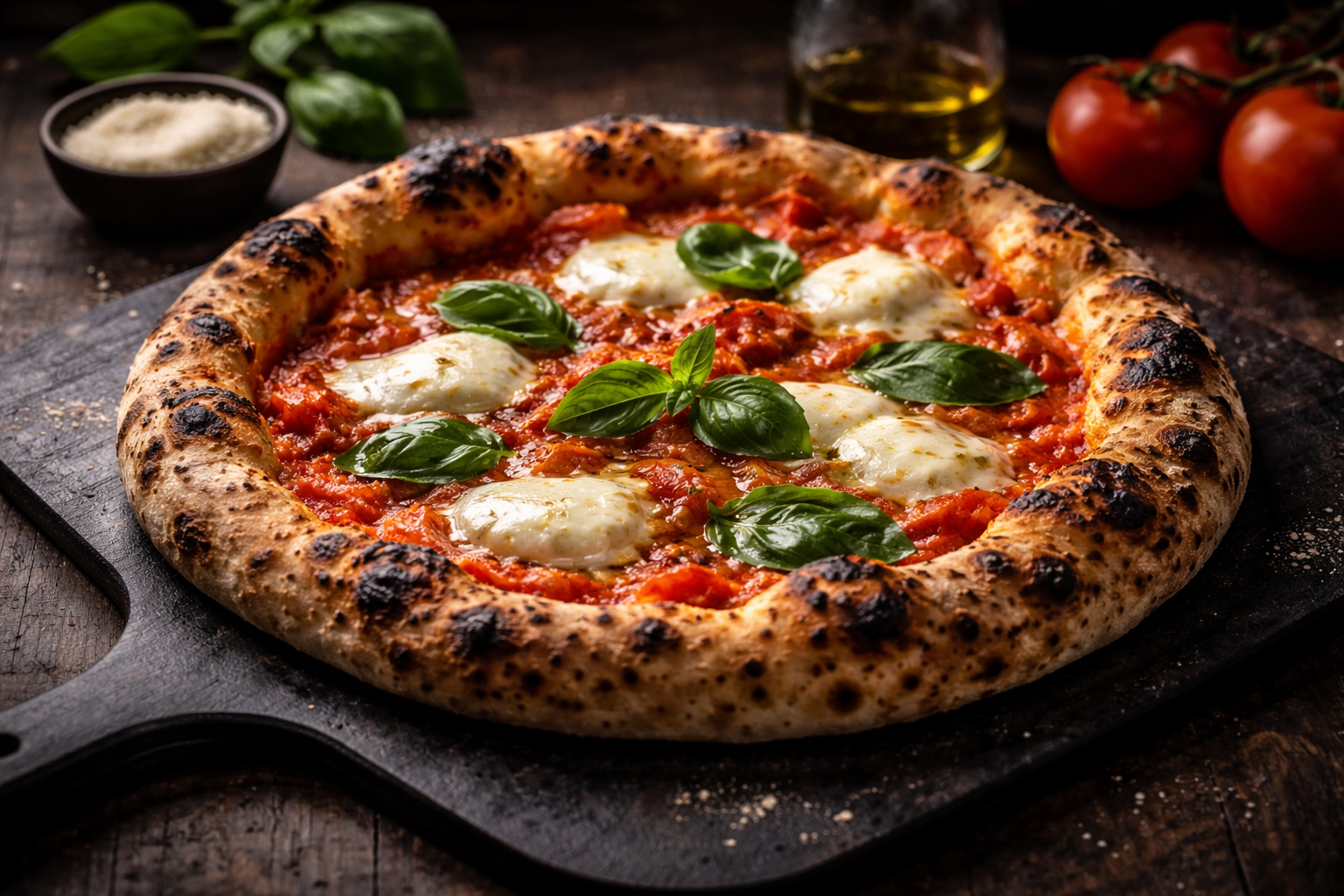
The first pie came out with a cornicione so puffy and blistered it looked like it belonged in a pizzeria. The bottom had exactly the right char — present, flavorful, not coal. My partner came into the kitchen, looked at it, and said absolutely nothing for about four seconds. Then: “Okay, this is actually incredible.”
That is the whole story. I made coal once, I learned a lot of things, and now I make something incredible. You are going to skip the coal phase entirely.
If you have been curious about sourdough neapolitan pizza home oven baking but felt like it was out of reach without professional equipment, I want you to let that hesitation go. Get yourself the right baking surface, invest in 00 flour, give your dough the cold ferment it deserves, and crank that oven as high as it will go. The results will quiet your table in the best