I want to tell you about the night I confidently slid a sourdough pizza into my oven, heard a loud crack, and watched my brand-new pizza stone split cleanly in half like it was auditioning for a dramatic movie scene. My husband walked in right at that moment, looked at the oven, looked at me, and just slowly backed out of the kitchen. That disaster is exactly why I became a little obsessed with the pizza stone vs baking steel sourdough debate — and honestly? That cracked stone might be the best thing that ever happened to my pizza nights.
If you have been baking sourdough bread for a while and you are ready to turn that beautiful, tangy starter into sourdough pizza, the very first question you will wrestle with is what to bake it on. A pizza stone? A baking steel? Your trusty cast iron skillet? I tested all three extensively — some by choice, some by humiliating accident — and I am here to save you from repeating my mistakes.
Pizza Stone vs Baking Steel for Sourdough: Why the Surface Matters More Than You Think
Here is something that took me embarrassingly long to understand: sourdough pizza dough behaves differently than your standard yeast-based pizza dough. It tends to be slightly wetter, more extensible, and it has that gorgeous open crumb structure you have worked so hard to develop. All of that means it needs intense, reliable bottom heat — fast — or you end up with a pale, chewy base and overcooked toppings. The surface you bake on determines everything about that bottom crust.
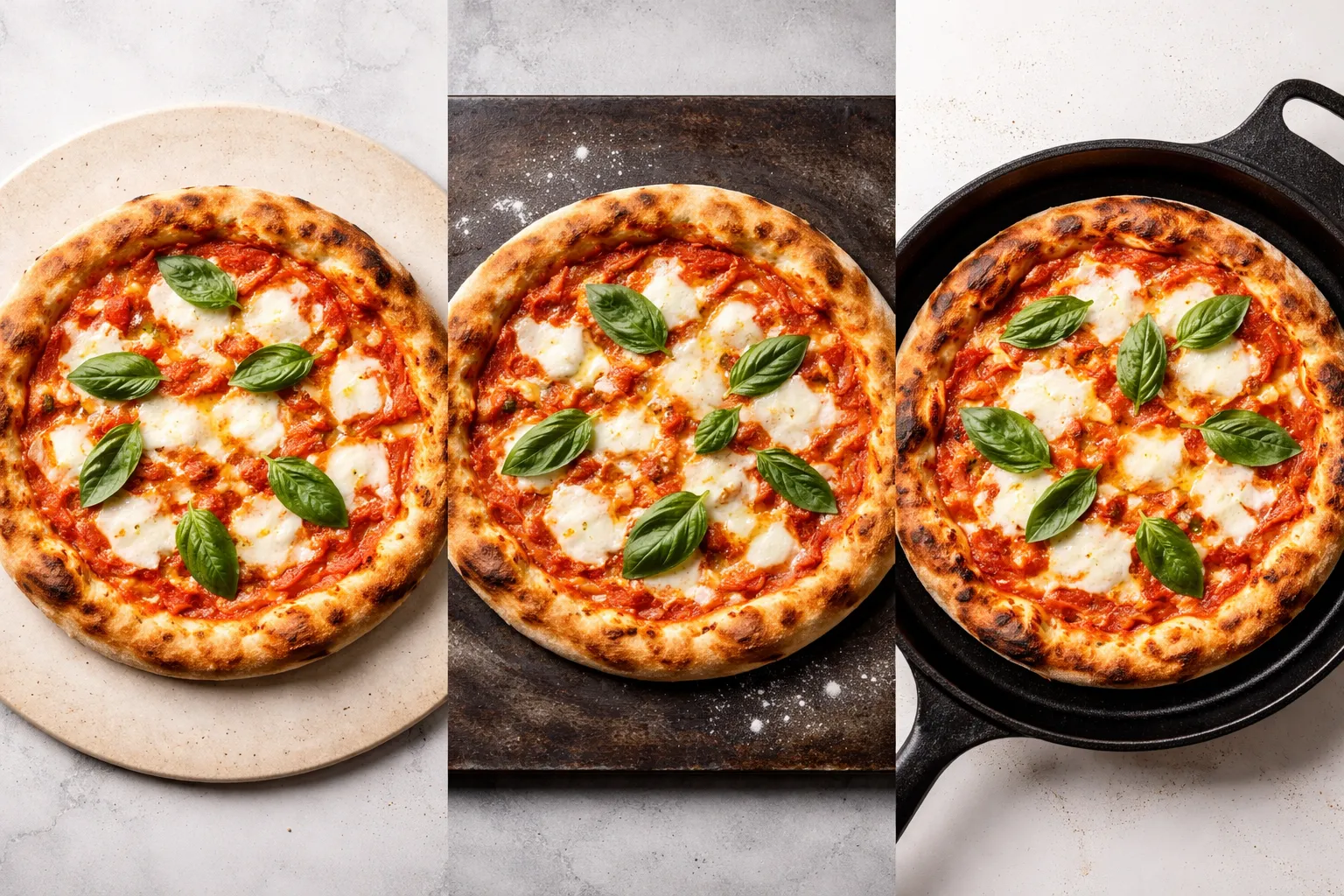
Heat retention and heat transfer are two totally different things, and this is where the pizza stone vs baking steel sourdough conversation gets really interesting. A stone retains heat reasonably well but transfers it slowly. A steel retains heat beautifully and transfers it to your dough at an almost alarming speed. Cast iron sits somewhere in the middle, with its own unique quirks. Let me break each one down honestly.
The Honest Breakdown: Stone, Steel, and Cast Iron
Pizza Stone: The Classic Choice (With a Catch)
A pizza stone is porous, which means it absorbs moisture from the dough as it bakes. For sourdough pizza, that is actually a feature, not a bug — it helps crisp up the bottom without making it tough. The problem, as I learned the hard way, is thermal shock. If your stone has any residual moisture in it, or if you preheat it too quickly, it can crack. Mine cracked because I had washed it the day before and it was not fully dry. Lesson learned the loud way.
That said, a good cordierite stone — specifically one labeled thermal shock resistant — is a genuinely wonderful tool, especially for beginners. It is more affordable than steel, lighter to handle, and it produces a beautifully crisp, slightly blistered crust. Just always preheat it slowly, never wash it with soap, and for the love of good pizza, make sure it is bone dry before it goes anywhere near a hot oven.
Baking Steel: The Upgrade That Changed Everything for Me
After my stone catastrophe, I finally bit the bullet and bought a baking steel. I was skeptical that a slab of metal could be worth that much more money, and then I made my first sourdough pizza on it and stood at the oven door with my mouth open. The bottom crust had this deep, leopard-spotted char happening within eight minutes. Eight minutes. My stone pizzas had been taking fourteen to sixteen minutes and never quite achieving that color.
Steel conducts heat so efficiently that it essentially recreates the floor of a professional pizza oven in your home kitchen. For sourdough pizza specifically — where you want rapid oven spring in the crust and fast cooking so your fermented dough does not turn gummy — a baking steel is genuinely transformative. Preheat it at your oven’s highest temperature for at least 45 minutes on the top rack, launch your pizza, and switch to broil for the last two to three minutes. It sounds aggressive. It is perfect.
Cast Iron: The Underdog Worth Mentioning
A cast iron skillet or griddle is not the sexiest pizza tool, but if you already own one, it absolutely works. Preheat it on the stovetop until it is ripping hot, slide your shaped sourdough dough in, cook the bottom for two minutes, then transfer the whole pan to a broiler-high oven. You will get a fantastic result. The limitation is size — most cast iron pans cap out around 12 inches, so you are making personal pizzas rather than a big family pie. Great for weeknight dinners, a little frustrating when company comes over.
The Steel That Won’t Betray You Mid-Bake
After my pizza stone shattered, I realized I’d been gambling with a fragile material that couldn’t handle the thermal shock of my sourdough dough hitting a preheated surface. Steel changed everything — it’s nearly indestructible and heats more evenly than ceramic ever could.
What works
- The crust browns faster and more evenly than on stone or cast iron — I’m getting that crispy bottom without the pale spots in under 8 minutes at 500°F.
- You can preheat it aggressively without worrying about cracks; I’ve gone straight from room temperature to 550°F with no damage after the first use.
- The 1/4″ thickness holds heat so consistently that my second pizza bakes almost identically to my first, unlike cast iron which cools noticeably between rounds.
What doesn’t
- It’s heavy enough that transferring it in and out of the oven requires actual care — drop it and you’ll damage your oven rack, not the steel.
- The initial investment is higher than cordierite stone, so if you’re just testing the waters with pizza baking, this feels like overkill at first.
I’ll admit I was skeptical about spending this much on a flat piece of metal — until my third pizza, when I realized I hadn’t adjusted my technique or oven temp once and everything was still turning out perfectly. If you’re serious about sourdough pizza, grab a Baking Steel – The Original Ultra Conductive Pizza Stone (14″x16″x1/4″).
This post contains affiliate links. As an Amazon Associate, I earn from qualifying purchases at no extra cost to you.