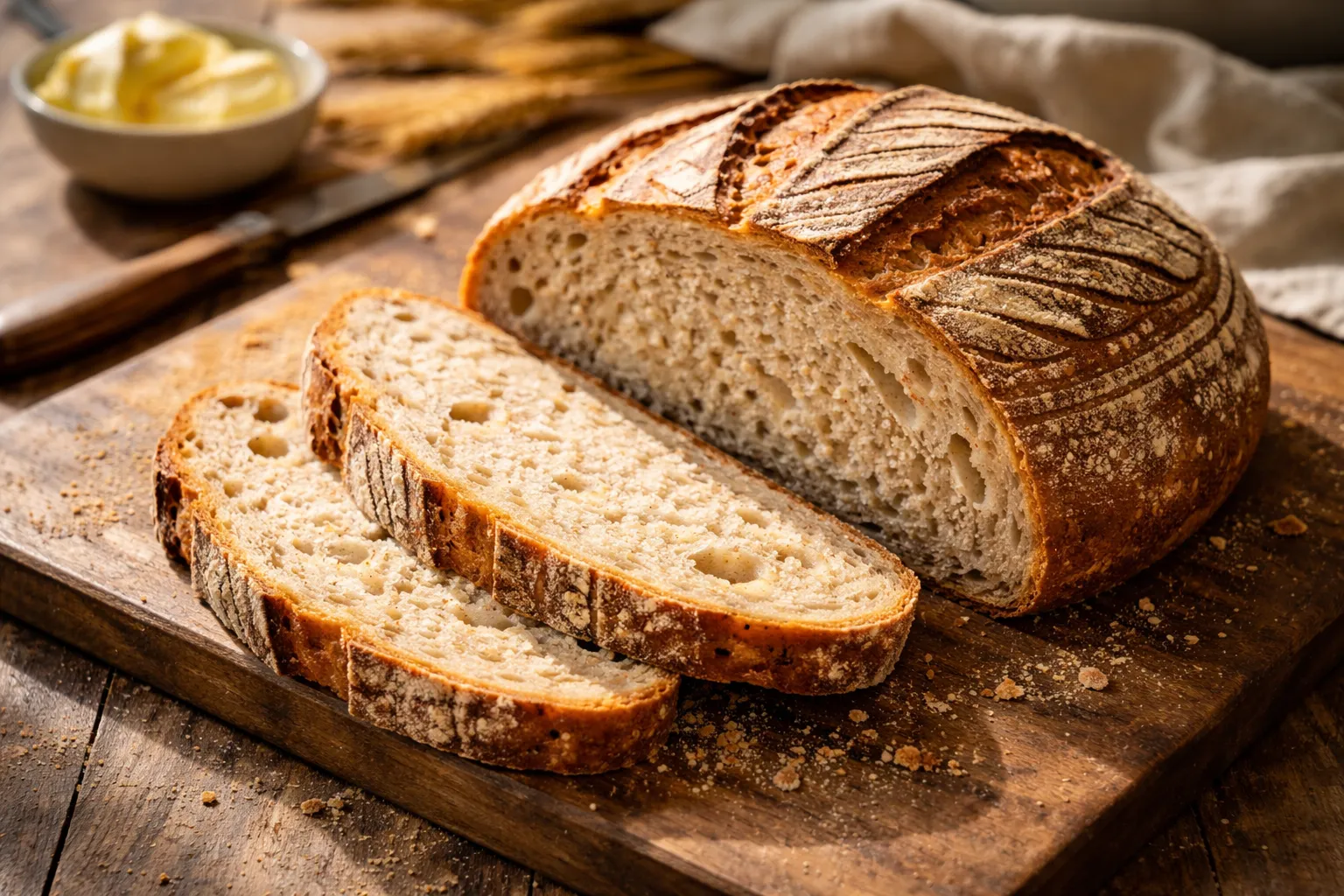
50/50 Whole Wheat Sourdough: The Everyday Loaf I Actually Keep Coming Back To

I want to tell you about the time I confidently handed my neighbor a loaf of bread and watched her take one polite bite before quietly feeding the rest to her dog. The loaf in question was my fourth attempt at a 100% whole wheat sourdough, and it had the texture of a slightly damp brick. That dog, by the way, also seemed uncertain about it. That humbling afternoon is exactly what sent me down the path to discovering the 50 50 whole wheat white sourdough blend — and honestly, it changed everything about how I bake.

This post contains affiliate links. As an Amazon Associate, I earn from qualifying purchases.

I had been chasing the dream of a deeply nutritious, hearty whole wheat loaf for months. Every forum I read made it sound so achievable. Every photo I pinned looked gorgeous. But my actual loaves? Dense. Gummy. Occasionally resembling a frisbee with ambitions. Something had to give, and it turned out that something was my stubbornness about going full whole wheat.

Why the 50/50 Blend Actually Works (And Why I Resisted It for So Long)

Here is the thing nobody tells you when you first fall in love with sourdough: whole wheat flour is a bit of a diva. It absorbs water differently, it ferments faster, and the bran particles in it literally cut through gluten strands like tiny little scissors. That is why 100% whole wheat loaves so often turn out dense and flat — the gluten network that traps all those beautiful air bubbles just gets shredded before it has a chance to shine.

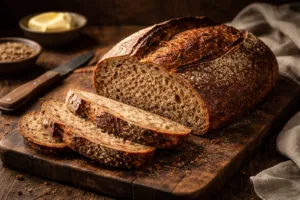
White bread flour, on the other hand, has a higher protein content and no bran interference. It builds strong, stretchy gluten easily. So when you combine the two at equal parts, something genuinely magical happens. You get the nutty, complex flavor and added fiber from the whole wheat, and you get the structure, lift, and open crumb from the white flour. The loaf actually rises like it means it. The crust gets that satisfying crackle. And the flavor? Way more interesting than a plain white sourdough.

I resisted this for way too long because I had convinced myself that a 50/50 loaf was somehow a compromise or a cheat. It is not. It is just smart baking.

What You’ll Need: Ingredients and My Gear

The Flours

Flour choice matters more than people realize, and for this loaf you have some great options depending on your preference and budget.

For the whole wheat half, I rotate between a couple of favorites. Bob’s Red Mill Organic Whole Wheat Flour is a pantry staple I keep coming back to — it is widely available, reliably fresh, and has a lovely earthy flavor that comes through beautifully in the finished loaf. If you want to stock up, the 365 by Whole Foods Market Organic 100% Whole Wheat Flour in the two-pack is a solid economical choice with great quality. There is also a wildcard worth knowing about: King Arthur White Whole Wheat Flour, which is milled from a lighter variety of hard white wheat. It gives you all the whole grain nutrition with a milder flavor and slightly better rise, which makes it a wonderful option if you are baking for people who claim they do not like whole wheat bread.

For the white bread flour half, I almost exclusively use King Arthur. Their Unbleached Organic Bread Flour two-pack is my go-to when I am stocking up, and the King Arthur 100% Organic Bread Flour single 5-pound bag is perfect if you want to try it out first. The higher protein content (around 12.7%) gives this loaf the structural backbone it needs to rise tall and stay open.

The Rest of What You Need

  • An active, bubbly sourdough starter (fed 4 to 12 hours before mixing)
  • Filtered or room-temperature tap water
  • Fine sea salt
  • A large mixing bowl and a kitchen scale (baking by weight is non-negotiable for consistent results)
  • A banneton proofing basket or a bowl lined with a well-floured linen towel
  • A Dutch oven for baking

The 50/50 Whole Wheat Sourdough Recipe

The Formula (for one medium loaf)

  • 225g whole wheat flour (or white whole wheat)
  • 225g white bread flour
  • 325g water (about 72% hydration — start here if you are newer to whole wheat doughs)
  • 90g active sourdough starter (100% hydration)
  • 9g fine sea salt

The Process

Autolyse: Mix your flours and 300g of the water until no dry flour remains. Cover and rest for 45 minutes to one hour. This step is especially helpful with whole wheat because it gives the bran time to hydrate and softens the dough before any gluten development begins.

Add starter and salt: Dissolve your starter in the remaining 25g of water and pour it over the autolysed dough. Sprinkle on the salt. Use your hands to squeeze and fold everything together until fully incorporated. It will feel shaggy at first. That is fine.

Bulk fermentation: This is where whole wheat bakers need to stay alert. Because whole wheat ferments faster than white flour, your bulk time will be shorter than you might expect. At 75 to 78 degrees Fahrenheit, expect 4 to 5 hours. You are looking for the dough to increase by 50 to 75%, feel airy and jiggly, and show bubbles on the surface and sides. During the first two hours, perform 4 sets of stretch and folds every 30 minutes to build strength.

Shape and cold proof: Gently pre-shape into a round, rest for 20 minutes, then do a final shape. Place seam-side up into your floured banneton, cover, and refrigerate for 8 to 16 hours. The cold proof slows fermentation, develops incredible flavor, and makes the dough much easier to score.

Bake: Preheat your oven to 500 degrees Fahrenheit with your Dutch oven inside for at least 45 minutes. Tip your cold dough onto parchment, score it decisively, and bake covered for 20 minutes. Remove the lid, drop the temperature to 450 degrees, and bake for another 20 to 25 minutes until deeply golden. Let it cool for at least one hour before slicing. I know. It is so hard. Do it anyway.

A Few Tips That Took Me Way Too Long to Learn

Do not overferment. This is the single most common mistake with whole wheat sourdough. Because the bran accelerates fermentation, it is very easy to push the dough past peak. An over-fermented whole wheat dough will spread sideways instead of upward in the oven. If your dough smells very sour and feels almost sticky-slack during shaping, you have gone a little too far. It will still taste great but will be flatter.

Flour your banneton generously. Whole wheat doughs tend to be stickier. A mix of rice flour and whole wheat flour dusted into your basket works brilliantly to prevent sticking nightmares.

Score with confidence. A hesitant score tears rather than cuts. One clean, swift motion at a 30 to 45 degree angle will give you that beautiful ear.

The Happy Ending (And Why This Is Now My Everyday Loaf)

About three weeks after the Dog Incident, I knocked on my neighbor’s door again. I was holding a round, golden loaf that had actually risen properly. The crust crackled when I tapped it. It smelled incredible. She looked at me with what I can only describe as cautious optimism.

She tried a slice. Her eyes went wide.