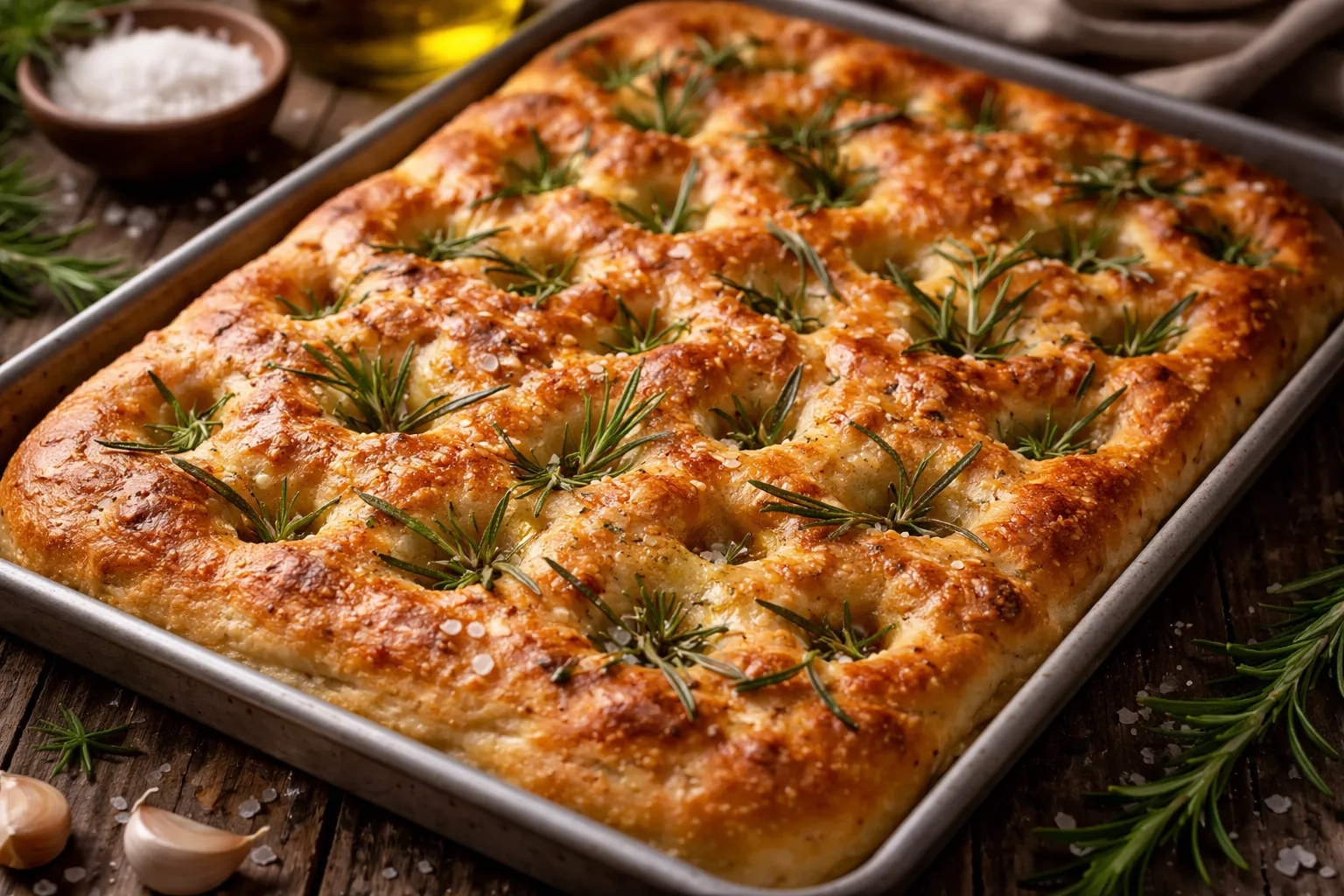
This sourdough discard focaccia recipe is one of the best things you can make with leftover starter — no waste, no guilt, just incredibly golden, dimpled bread with a crispy bottom and pillowy interior. If you’ve been tossing your discard down the drain, this is your sign to stop. Sourdough discard adds a subtle tang and depth of flavor that transforms a simple focaccia into something truly special.
The beauty of this sourdough discard focaccia recipe is its flexibility. Whether you have 100g or 200g of discard sitting in your fridge, this recipe works beautifully with any amount in between — just adjust the remaining flour and water accordingly. Sourdough discard focaccia is endlessly versatile too: top it with flaky salt and rosemary for a classic, or load it up with olives, cherry tomatoes, or caramelized onions. However you make it, you’re only a few hours away from the best bread of your week.
I want to tell you about the day I accidentally made the best bread of my life while panicking in my kitchen in my socks. It was a Tuesday, dinner was two hours away, and I had just remembered I had promised to bring bread to a last-minute get-together at my neighbor’s house. I had no active starter ready to go, a jar of neglected sourdough discard in the back of the fridge, and a very unhelpful dog staring at me. What came out of that chaotic, slightly sweaty afternoon was a sourdough discard focaccia so golden, so garlicky, and so impossibly good that my neighbor asked me if I had bought it from a bakery. Reader, I did not.
If you have a jar of discard sitting in your fridge right now, please stop what you are doing and make this focaccia. It comes together faster than almost any other sourdough project, it requires zero active starter, and it rewards you with a thick, pillowy, dimpled bread that tastes like it took all day. I am going to walk you through exactly how I make it, share the embarrassing details of how I discovered this recipe, and give you every tip I have learned along the way.
Why Sourdough Discard Focaccia Is the Best Thing in Your Fridge Right Now
Focaccia is one of the most forgiving breads you can make, and when you add sourdough discard to the dough, something genuinely magical happens. The discard brings a gentle tang and a subtle depth of flavor that you simply cannot get from a straight commercial yeast loaf. Because we are using discard and not an active levain as the sole leavener, we do supplement with a small amount of instant yeast here to keep things moving and get dinner on the table at a reasonable hour. But the discard is the soul of this bread. It is what makes people lean over the pan and say, “wait, what IS that?”
The other reason I love this recipe specifically is the texture. Focaccia is meant to be baked in a generous pool of olive oil, which creates a crispy, almost fried bottom crust while the interior stays cloud-soft and airy. Combined with the slight acidity from the discard, the result is a bread that is complex and satisfying in a way that a simple white focaccia just is not. It is also, as I discovered on that frantic Tuesday, entirely achievable before dinner.
What You Will Need to Make This Recipe
The Sheet Pan That Actually Holds Oil Without Pooling in the Corners
Focaccia lives and dies by its oil—both in the dough and in the dimpling—but a warped or uneven sheet pan will sabotage you before you even get the oven door open. I spent months fighting pooling oil and unevenly baked edges until I realized my ancient pan was the problem, not my technique.
What works
- Stays perfectly flat through repeated heating cycles—no oil migration or puddling in one corner while the opposite side stays dry.
- The rolled edges mean your focaccia rises evenly without the dough climbing the sides or baking unevenly at the perimeter.
- Heat distribution is genuinely even, so your bottom gets that golden, crispy finish without the burnt edges you get with cheaper pans.
What doesn’t
- Stainless steel can stick if you’re not generous with oil, especially during the dimpling phase when you’re pressing into a wet dough.
- Not non-stick, so cleanup requires actual scrubbing—nothing dramatic, but it’s not the self-cleaning miracle some pans pretend to be.
I almost ditched this pan after my first bake because I forgot how much oil-to-stainless-steel friction matters, but one extra drizzle and a proper preheat changed everything. Grab a Nordic Ware Naturals Half Sheet Pan and stop letting your pan control your focaccia.
This post contains affiliate links. As an Amazon Associate, I earn from qualifying purchases at no extra cost to you.